Where Interior Designers Should Start With AI
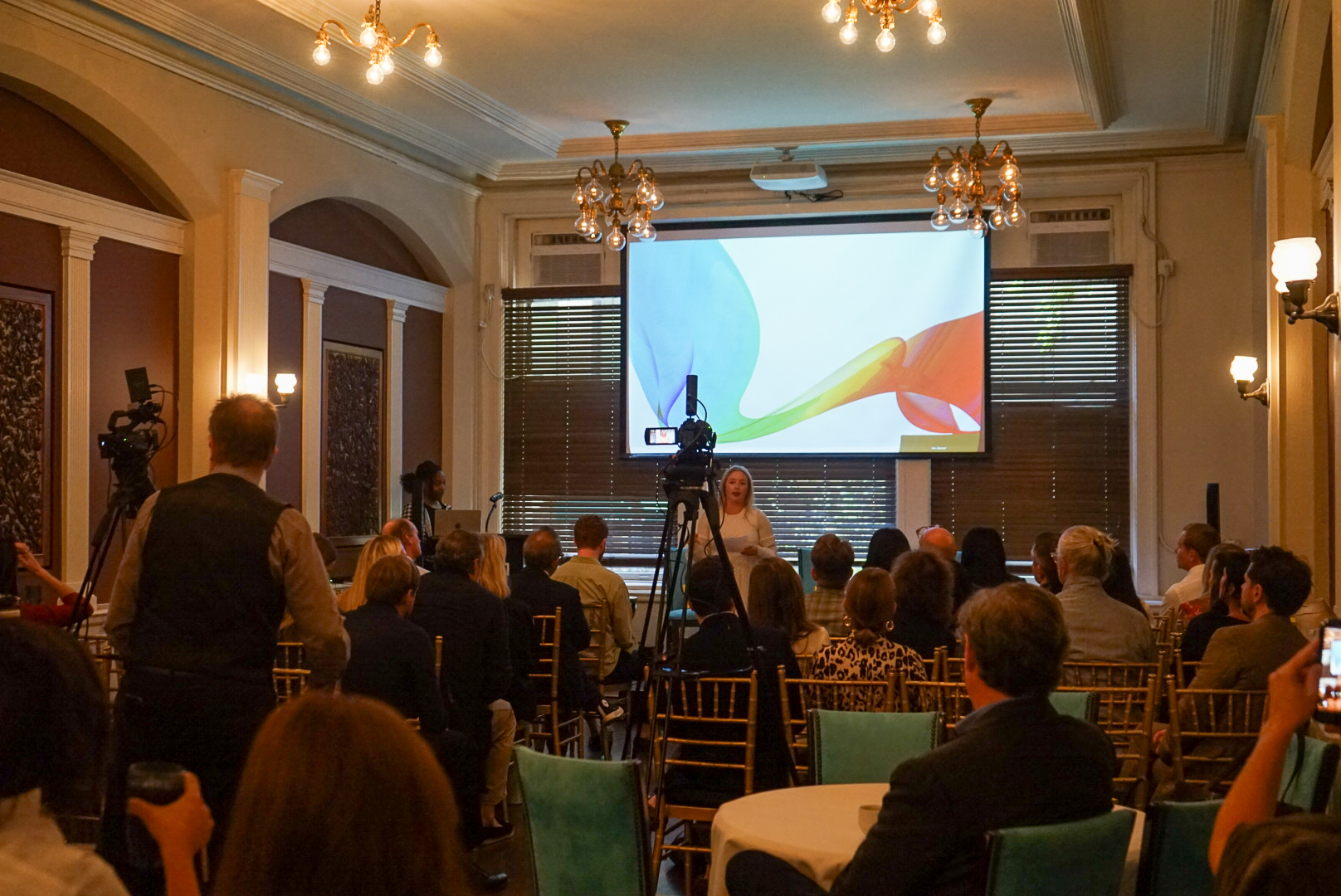
In September 2026, we brought the designers and brands we work with together for our first Client Summit. We’re Nylon Consulting, a New York PR and content agency for interior design and the home industry, and we built the day around one goal: giving our clients an inside view of the shifts reshaping their businesses. High on that list was AI for interior designers, and what it actually looks like once it’s part of the daily workflow.
We began with AI in Practice, a panel that brought together three operators using the technology in very different ways. Laura Bindloss, our founder, moderated the conversation with Dalia Soles, founder of Design Assisted, which handles back-office operations for design firms nationwide; John B.R. Long III of Profitmind; and Brian Brennan, Vice President of Artemest in the US. Each walked through where AI has earned a place in their work and what they’ve learned from putting it to use.
Most design firms already use AI to polish an email or answer a quick question. The harder part is knowing what to build next, and for the designers in the room, the panel’s answer was refreshingly down to earth: start with operations, and keep a person checking the work.
How AI helps interior designers build SOPs in months, not a year
Standard operating procedures, or SOPs, are the place to start. If the term is new to you, an SOP is simply a written, step-by-step guide to how a task gets done in your firm, from placing a furniture order to onboarding a new client, so anyone on the team can do it the same way every time.
“I like to start with SOPs. Very unsexy, but they’re so integral to scaling your business, to letting people see inside your brain.” – Dalia Soles, Design Assisted
SOPs are also the work most firms keep putting off, and AI changes that. Building them with a design firm used to take Dalia around a year. Now it takes one to three months, depending on how complex the firm’s processes are. The result works as a training manual for the whole team, and it makes it easy to spot when someone steps outside the process.
How interior designers can use AI for time tracking
Ask a room of designers who struggles with time tracking and most hands go up. The fix can be as simple as talking to an AI tool through the day, telling it what you’re starting and finishing, and letting it build the log. Set an agent to update your spreadsheet once a week, and you’ll know exactly where your hours go without it feeling like a chore.
For a design firm, that record feeds better project estimates and staffing decisions.
Where AI gets it wrong, and why design firms should check every output
AI saves real time, and it still gets things wrong, sometimes with total confidence. On the panel, John shared how an AI tool once invented quotes for his book, then supplied page numbers for pages that didn’t exist.
“Don’t assume that because you’ve given it a directive, and it sounds smart, what it comes back with is something you can use 100% of the time.” — John B.R. Long III, Profitmind
Automations need the same oversight. A workflow that updates order tracking will occasionally put information in the wrong place, so someone on the team should review what lands in the tracker.
Three first steps for using AI in your design firm
– Pick one process you repeat every week and talk it through with an AI tool to draft the SOP.
– Log your time conversationally for two weeks.
– Decide who reviews anything AI produces before a client sees it.
Nylon Consulting is a PR, social, and content agency specializing in luxury home, interiors, and design brands.