How to Create a Brand Voice When Luxury Design Brands Adopt AI
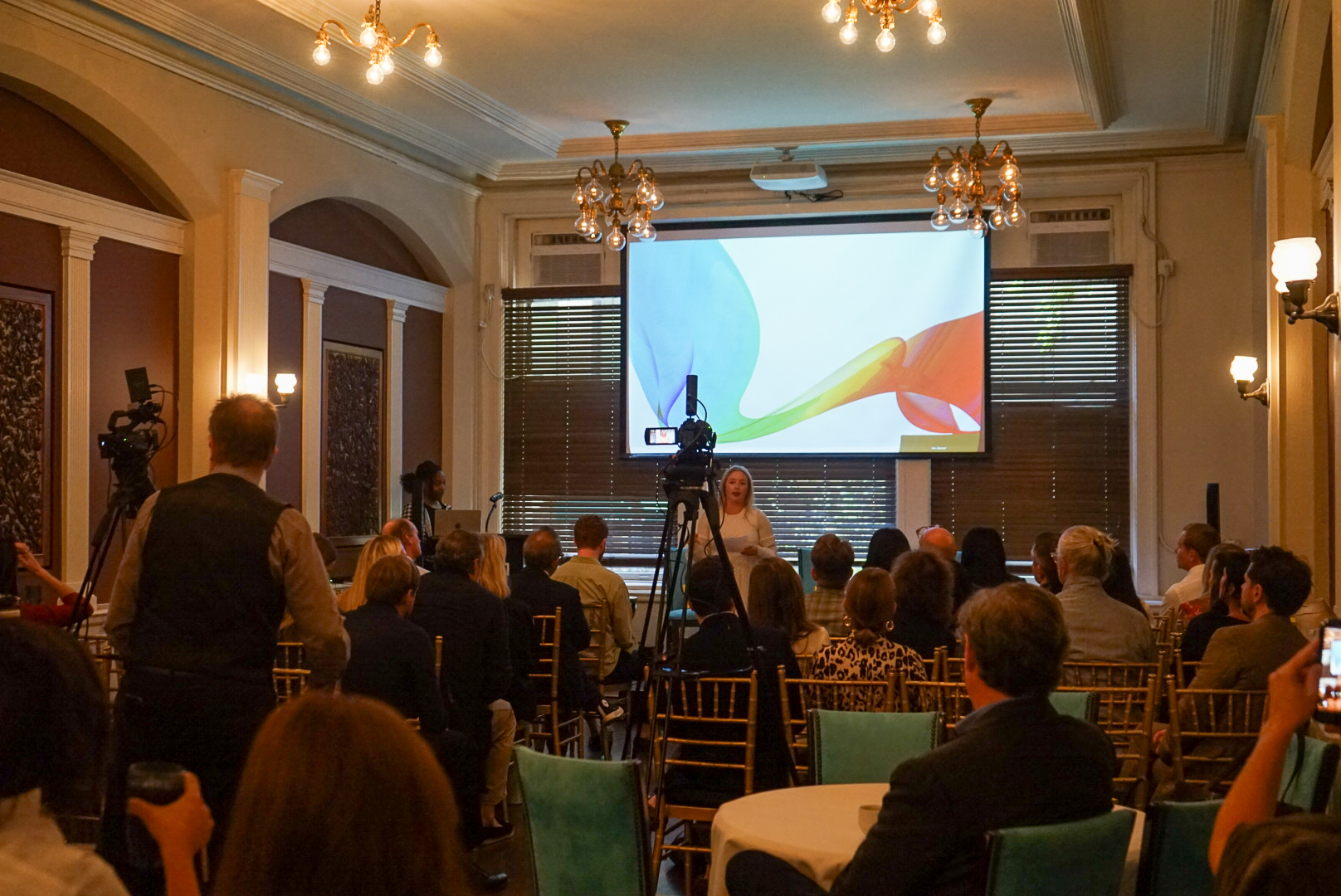
In September 2026, Nylon Consulting hosted its first Client Summit. We’re a New York PR and content agency for interior design and the home industry, and our clients are the designers, architects and luxury home brands defining it. For one day, we brought them together with the people shaping how their businesses get marketed right now, including how brand voice and AI work together.
Held for Nylon clients, the summit opened up conversations that go to the heart of building a strong brand voice, starting with our opening panel, AI in Practice. On it, three very different operators shared how they’ve actually put AI to work, and what they’ve learned along the way. The panel was moderated by Laura Bindloss, founder of Nylon Consulting, and featured Brian Brennan, Vice President of Artemest in the US; John B.R. Long III of Profitmind; and Dalia Soles, founder of Design Assisted.
Brand voice kept coming up, and anyone who writes for a luxury brand will understand why. The minute AI starts drafting client emails, the voice is the first thing at risk. So when Laura asked what a business should set up before anything else, Brian’s answer was immediate: your tone of voice and your brand guidelines.
What goes wrong when AI writes without a brand voice
It usually starts small. Someone drafts a message with an AI tool, sends it without really checking the tone, and it lands badly. Then someone has to smooth over the fallout from a message nobody on the team actually wrote. It happens with clients, and it happens between colleagues too.
“If you have tools for writing copy or building responses to clients, you need to know the tone of voice you’re presenting, because it can very easily go wrong.” — Brian Brennan, Artemest
\For a luxury brand, the stakes are higher. Design clients are buying craft, discretion and a relationship. A reply that reads as generic can undo years of careful positioning in a few sentences.
How luxury brands can use AI behind the scenes and keep client-facing work on-brand
A useful way to think about it is behind the curtain versus in front of it. Research, reporting and meeting prep can move fast with AI, and clients never see that work. Anything that reaches a client, from an email to a proposal, has to sound unmistakably like the brand.
When brand guidelines are built into the tools a team uses, leaders don’t have to check every single output. The voice is already in place.
Why every brand using AI needs a “custodian of taste”
Someone has to own the taste level. Think of that person as a custodian: someone with real judgment who decides what good looks like before anything goes out.
“Implementing a custodian, someone with a taste level, someone with real decorum, is absolutely essential, especially for more junior staff.” — Brian Brennan, Artemest
That’s because the way people learn the craft is changing. Presentations used to be built by hand, slide by slide. Now a tool can produce the whole thing in minutes. Someone still has to show the team what it should look like, and why.
How to protect your brand voice when using AI
– Write down how your brand sounds: the words you use, the words you never use, and how formal you are with clients.
– Give your AI tools real examples. Years of past emails and customer service responses can help build an accurate twin of your brand’s voice.
– Decide who signs off on anything client-facing.
– Revisit your guidelines as the brand evolves.
Nylon Consulting is a PR, social, and content agency specializing in luxury home, interiors, and design brands.